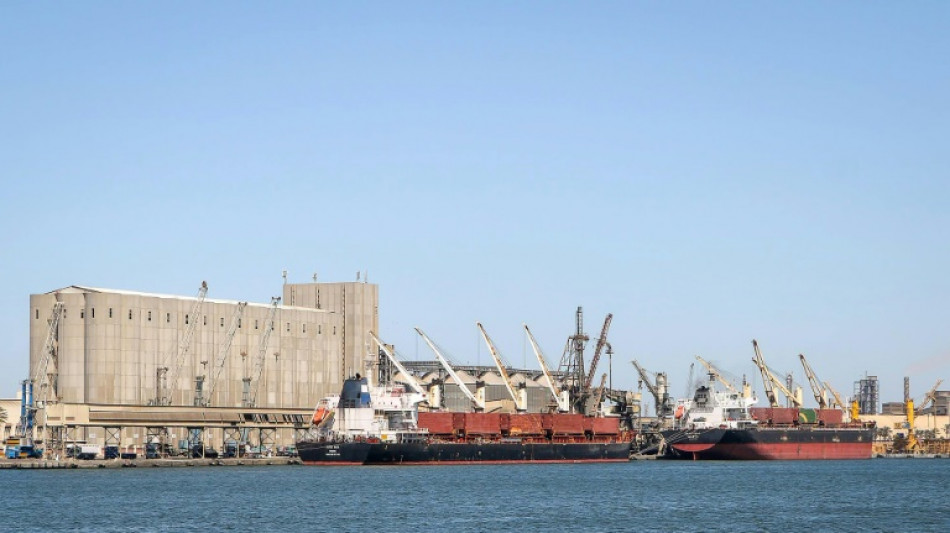
Egypt captains recount scramble to stop disaster after drone strike / Photo: - - Damietta Port Authority/AFP

Marine officers who battled fires aboard two gas vessels struck in a drone attack on Egypt's port of Damietta feared the ships were "a bomb waiting to explode" that could have destroyed the entire port and ripped through the city beyond.
The US-owned Energos Winter floating storage and regasification unit and the Greek-owned LNG tanker GasLog Salem -- which were moored side by side at the Mediterranean port -- have a combined carrying capacity of 300,000 cubic metres.
"The entire port could have exploded, along with parts of the city of Damietta," said one officer, recalling fears that the flames could spread to nearby LNG infrastructure in the Nile Delta city of more than 300,000 residents.
"As I was putting out the fire, I was only thinking about protecting the port and the lives of the people in Damietta," he told AFP, speaking on condition of anonymity.
Wednesday's strike, the first drone attack on Egyptian territory since the outbreak of the Middle East war, has not been claimed and Egypt has not accused any group or country of carrying it out.
A security official briefed on the ongoing forensic investigation told AFP it could take a long time for Cairo to release its results.
- No eyes on the drone -
A second captain said he and his colleagues had been told they might not return alive, and to "say our last prayers" before heading out to fight the blaze.
The officers first heard an explosion aboard the GasLog Salem at around 2:10 pm (1110 GMT) on Wednesday.
"About 10 minutes later, we heard a second explosion on the Energos Winter," he said. "The second explosion was much larger and a much bigger fire erupted."
The captain credited the GasLog Salem crew with quickly shutting gas tank valves, helping contain the fire. The blaze aboard the tanker was extinguished within two hours.
The fire on the Energos Winter, however, proved far more difficult to control and continued burning until around 8:00 pm after the crew had quickly evacuated the vessel.
Emergency responders surrounded each vessel with four firefighting tugboats, separated them and towed them away from critical port infrastructure while battling the flames.
According to one officer, the second explosion was at a connection point between both vessels.
At a cabinet meeting on Thursday, Prime Minister Moustafa Madbouly said the vessels had been moved for fear of "an explosion that could impact the entire port".
Neither captain initially realised that the fires had been caused by a drone strike.
"No one saw anything. The only alert we received was for a high-pressure tank," one said.
Investigators later recovered drone fragments from the vessels after the fires were extinguished.
The captain said the drone appeared to be "small" because it managed to evade detection by "our air defence systems, and the port authority's own surveillance cameras didn't catch anything."
His account could not be independently verified.
- 'Not Egypt's war' -
Requesting anonymity to comment on an ongoing investigation, the security official called the case "complicated and confusing", but that authorities would eventually announce who had launched the strike.
"We have already recovered a significant portion of the drone's wreckage, and the search for the additional fragments is ongoing," he told AFP.
The drone strike is similar to others that have hit Cairo's Gulf and Arab allies throughout the US-Israeli war against Iran, but is unprecedented in Egypt.
Egypt's leaders have struck a cautious note since, warning against any "escalation" in the conflict and discouraging "speculation" while keeping a tight grip on the media narrative.
Cairo has for months played a conservative peacemaker role that analysts say it is unlikely to abandon now, even after it has come under attack itself.
The security source added that Egypt would not draw conclusions until the investigation was complete and insisted Cairo would "not be dragged into the war".
"This is not Egypt's war and we will not be provoked," the official said.
"Egypt is fully capable of defending its national security against any threat, regardless of its source, at a time and place of its choosing."
D.al-Shehri--al-Hayat