Philadelphia Natural History Museum Prepares to Close After Two Centuries

Philadelphia’s Academy of Natural Sciences of Drexel University is preparing to end public museum operations in September after more than two centuries of natural-history work and nearly 200 years as a public museum.
The Academy of Natural Sciences of Drexel University, one of Philadelphia’s oldest scientific institutions, is preparing to close its public museum after university and Academy leaders concluded that its current operating model was no longer financially sustainable. The institution was established more than 200 years ago, and its museum opened to the public in 1828. Drexel has said attendance patterns changed after the COVID-19 pandemic while operating costs continued to rise, putting pressure on the resources needed for the Academy’s broader mission.
The closure does not end the Academy itself. Scientific research, stewardship of its collections, education and other forms of public engagement are expected to continue. Drexel said it intends to focus resources on protecting the Academy’s scientific assets and identifying financially sustainable ways for the public to engage with parts of the collection in the future.
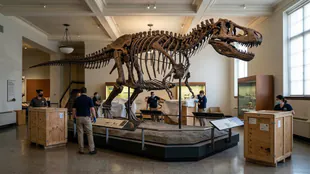
Before the museum closes, visitors still have access to several of its best-known exhibits. Dinosaur Hall includes a 42-foot Tyrannosaurus rex and displays representing more than 30 other species, along with fossils, models, dinosaur eggs and tools used by paleontologists. The Botany of Nations exhibition includes historic plant specimens associated with the Corps of Discovery and combines scientific material with instruments, journals, cultural objects, media and a native plant garden on the Benjamin Franklin Parkway.
The museum’s 37 wildlife dioramas span several floors. North American animals such as bears, mountain sheep, moose and bison appear on the first level, while African and Asian wildlife are featured above. The third floor includes extinct species such as the passenger pigeon and Labrador duck. A related display, Secrets of the Diorama, explains how field research, specimen preparation, painting and other artistic techniques are combined to construct the scenes.
Families can also visit Outside In, an area designed especially for children ages 3 to 8 that includes live animals and hands-on exploration, and The Big Dig, where children can simulate a fossil excavation. Smaller displays elsewhere in the building explain food chains, showcase current Academy research and present nearly 100 mollusk specimens.
Programming is continuing during the museum’s final weeks. Scheduled activities include workshops connected with Indigenous ecological knowledge, Dinos After Dark on Sept. 18, weekly Nature at Noon gatherings and a Sept. 16 panel at the Science History Institute focused on gender minorities working in scientific and technical fields. The announced closure has prompted strong reactions from residents, including nostalgia for childhood visits and concern about losing a long-standing public science institution.
R.al-Mansour--al-Hayat