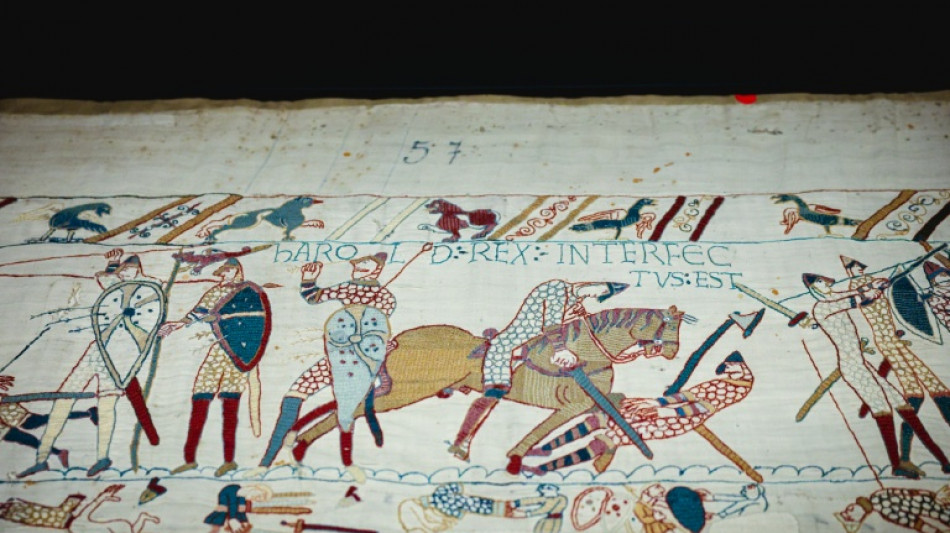
UK's little-known Bayeux Tapestry replica steps into spotlight / Photo: Adrian DENNIS - AFP

At a UK museum, a long expertly-embroidered cloth displayed across two galleries recounts in images the epic story of the Norman conquest of England.
But this is not the world-renowned 70-metre (230-foot) long Bayeux Tapestry on loan from France at the British museum. It is the little known "Bayeux" of Reading, a commuter-belt town west of London.
Here in the town's museum, this near-exact replica of the famed original has been quietly telling the story of William the Conqueror and 1066 for some 130 years.
The original 11th-century work goes on display to the public in London from Thursday.
With the first round of tickets sold out, curators at Reading are enjoying the flurry of attention the much-anticipated British Museum show has generated for their own version.
The replica -- the only full-sized woven copy known to be in existence -- is the work of 35 women who belonged to a Victorian-era embroidery society in Leek in central England.
"It's a masterpiece of the arts and crafts movement," said Brendan Carr, a curator at the Reading Museum, referring to the artisanal crafts revival in the second half of the 19th century that was a reaction to the advent of the machine age.
"My argument is that it's much more than second best to visiting the British Museum to see the original," he told AFP.
Working from photographs of the original for around a year from 1885 to 1886, each of the Victorian embroiderers took on a section of the tapestry.
- Nudity removed -
It is almost identical to the primary work apart from a number of small differences, notably the removal of nudity.
Pointing to one character who "in the original is shown as a rather well endowed figure", the copy showed "traces of underpants" that had been added, Carr noted.
The fact that only traces of undergarments appeared has been interpreted as possible proof that the embroiderer, Margaret Ritchie, knew that the original was being doctored and opted not to cooperate.
After it was completed it toured widely from the United States to South Africa for nearly a decade before going on display in Reading in 1895.
In a reversal of the current roles, the long international tour had the effect of raising the profile of the original housed in northern France.
"All of this time later, the original coming to England has returned the favour because there's now much more awareness of Britain's reproduction," Carr added.
The curator said he was happy that the London show was receiving so much attention and helping to bring the "truly iconic piece of art" to a whole new audience.
Despite the passage of time, one of the most striking parts of the work was the relevance of its depiction of war, according to Carr.
In a scene featuring one of only three women in the tapestry, soldiers are setting fire to her home as she escapes with a young child.
"It's so poignant, so timeless, so universal in terms of the innocent victims of war, those that are caught up in the collateral damage of war," he said.
"And we see it on our TV screens to this day."
H.Qureshi--al-Hayat