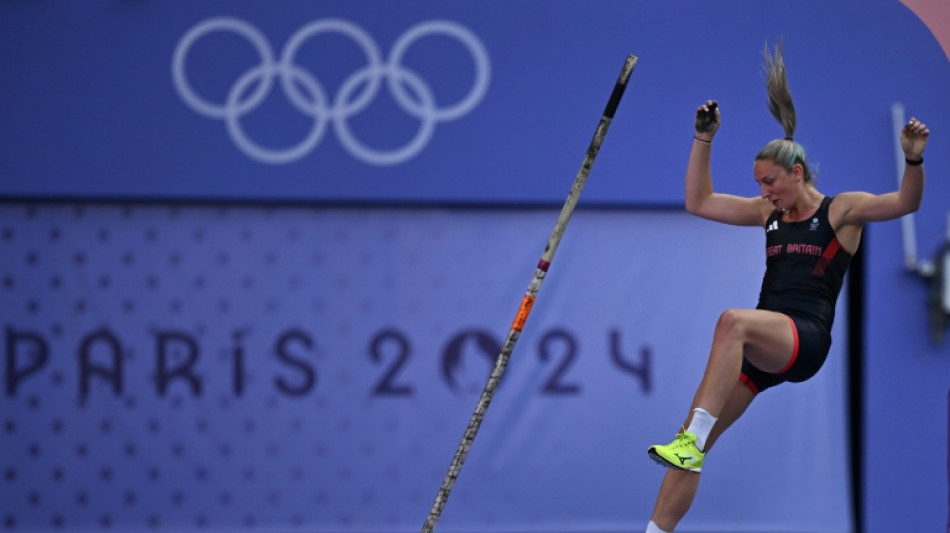
Euros to showcase new TV guidelines on non-sexualisation of women athletes / Photo: Ben STANSALL - AFP/File

New guidelines to prevent broadcasters sexualising coverage of women athletes will come into place when the European championships start in Birmingham on Monday.
The new guidelines have been drawn up by the Geneva-based European Broadcasting Union (EBU), the world's leading alliance of public service media, with 115 member organisations in 57 countries and an additional 33 associates in Asia, Africa, Australasia and the Americas.
The EBU said it had worked with women athletes to develop the guidelines, "which aim to avoid sexualising the action with unnecessary camera angles".
Several women athletes have been called in to best advise the EBU, among them British Olympic pole vault bronze medallist Holly Bradshaw, ahead of the August 10-16 European champs.
"How our sport is displayed during live broadcast can be incredibly powerful, yet sometimes harmful to the women competing, and the women and girls watching," Bradshaw said.
"I first-hand have received social media abuse and witnessed inappropriate videos online of myself and colleagues when slow-motion content of us competing is captured.
"Many athletes, myself included have been in competitive scenarios where they are more focused on the cameras instead of their own performance.
"On too many occasions cameras are zoomed in, showing super slow-motion action replays of athletes in undignified positions."
French pole vaulter Marie-Julie Bonnin added: "I'm doing sport and I don't want them to film my bum!"
- Acceptable camera angles -
Following talks with the athletes, the EBU drew up a roadmap for acceptable camera angles.
Those avoided included low camera angles underneath athletes in events such as the high jump or pole vault for fear of generating images of the athletes which could be considered compromising.
"The sexualisation of women athletes through selective camera angles and editing choices continues to be a significant concern across many sports broadcasts," said EBU sport executive director Glen Killane.
"Lingering shots on bodies, low-angle cameras that capture revealing views, and excessive slow-motion replays that serve no technical or storytelling purpose are among the issues observed in the media coverage of women's athletics competitions today."
British sprinter Amy Hunt said the issue was "definitely a conversation that we need to be having".
"As technology progresses people want to get closer to the sport," she conceded.
"When we were in London or Doha we had cameras in the blocks and women flagged it as a potential issue."
Hunt added: "The thing is for me, having women in those positions as athletes or in broadcast, is to flag it and being like 'maybe it's not a good idea for female athletes to have cameras in the blocks'.
"It's definitely a really welcome change. Also we shouldn't have to change what we are wearing in order to feel comfortable.
"I want to feel fast and powerful. I don't want to feel like in any way I'm inhibited by my clothing. So I think it's a very good step forward."
Pole vaulter Bonnin said she had already come across photos and videos of her in action that had "no sporting interest".
"Sometimes, I send messages to organisers and photographers asking them to delete images," she said.
"But I think, deep down, we have accepted the fact that there were images that weren't normal."
S.Harithi--al-Hayat