Student Activism Shifts Underground After University Crackdown on Gaza Encampments
A year after aggressive university interventions dispersed pro-Palestinian student encampments across the United States, activists report that visible campus protests have largely vanished. However, former participants describe a resilient movement that has shifted to underground organizing, legal defense, and strategic community building, despite facing suspensions, doxxing, and criminal charges.
One year after a wave of university police interventions dismantled pro-Palestinian student encampments across the United States, the visible landscape of campus activism has fundamentally changed. While large-scale demonstrations and physical occupations have largely disappeared from college grounds, former participants describe a movement that has not dissolved but rather retreated into underground networks, legal battles, and strategic community organizing.
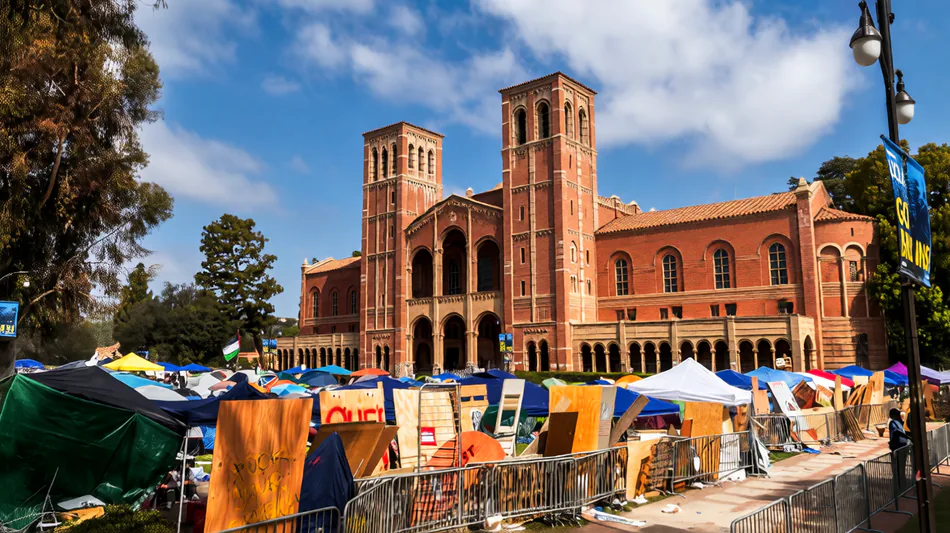
The shift follows a period of intense institutional response to protests sparked by Israel’s war in Gaza, which began after the October 7, 2023 attacks by Hamas. In 2024, students at institutions including the University of California, Los Angeles (UCLA) and the University of California, Irvine (UCI), established encampments demanding divestment from companies with ties to Israel. The universities responded with mass arrests, suspensions, and the deployment of law enforcement, actions that a recent report by the American Civil Liberties Union (ACLU) and Amnesty International USA alleges violated free speech laws and imposed severe punishments on students, faculty, and staff.
The ACLU and Amnesty International report argues that these institutional responses, combined with actions by the Trump administration, have "profoundly chilled student speech and advocacy." The authors contend that the crackdown made it easier for federal authorities to suppress activism, causing long-term damage to higher education and resulting in a steep decline in visible protests nationwide.
For many students involved in the 2024 encampments, the cost of participation was personal and professional. Catherine Hamilton, a former student journalist at UCLA’s Daily Bruin, witnessed the violent dispersal of an encampment in April 2024. She described attackers using bear spray and mace on protesters while campus security and police observed. Hamilton was assaulted during the incident, requiring emergency room treatment. Following the event, she resigned from the student newspaper to launch her own publication, Poppy Press, citing a need to speak out against the university’s actions.
Hamilton noted that many reporters were fired or let go from their positions for speaking out against what she described as genocide in Gaza. "There's a lot of news organizations where that doesn't fly, and you're not allowed to do that," Hamilton said. "But that's ultimately not a place that I would want to work anyway."
The consequences for students extended beyond journalism. Uma Jayakumar, a professor of higher education policy at the University of California, Riverside, observed that while reports quantify a decline in protests, they often miss how movements adapt. "That work that was initiated doesn't go away because the encampments were shut down. It has a life of its own, and it continues," Jayakumar said. She drew parallels between current student organizers and Black teachers during segregation who took their movements underground to avoid policing by white administrators.
Raeva Mv, a current UCLA student who participated in the encampment, described a shift from "big explosions of energy" to strategic, long-term organizing. Mv noted that students are frightened to protest publicly but are building a movement by connecting with those who witnessed the university’s response and found it wanting. This work includes documentary screenings and inviting volunteers from Gaza to speak at events.
Mv has spent much of her time at UCLA under a hold on her student account due to pending conduct charges and was banned from campus. Despite these restrictions, she recruited for multiple organizations focused on Palestinian rights during the 2026 Welcome Week, reporting "more interest than ever" among students eager to mobilize.
The personal stakes of activism were highlighted by Malik Alrefai, a student at UC Irvine who joined the encampment despite his parents’ warnings. Alrefai’s grandmother was forced from the West Bank in 1947 and 1948 during the Nakba, an event that shaped his identity. After hearing a university alert about a "violent" protest, Alrefai decided to join the demonstrators, stating, "There is finally a global conversation that recognized the existence of something named Palestine." He was later detained and charged with a misdemeanor, with his next trial date set for January.
Alrefai continues his advocacy through writing on Substack, exploring connections between immigration raids in the United States and the policing of Palestinians. He emphasized the importance of empathy across different struggles.
Hasan Mirza, former president of UCLA’s Muslim Student Association, expressed disillusionment with the institution he once valued for its core values of ethics and empathy. Mirza was present at the encampment during the night of the mob attack and felt let down by university officials and law enforcement. He described feeling "thrown under the bus and stigmatized" for speaking out. Despite these challenges, Mirza successfully applied to medical school, tweaking his application to honestly portray his convictions.
Asaad Traina, now a physician, was part of the group known as the Irvine 11, who were arrested and charged with misdemeanors in 2011 for disrupting a speech by then-Israeli Ambassador Michael Oren. Traina noted that while his criminal record initially hindered his medical school applications, he has since had it expunged. He observed that current students face more aggressive tactics, such as doxxing through websites like Canary Mission, which were not prevalent during his time.
Traina, who now has a family, said he hopes to maintain the courage of the current student activists. "I hope I don't give up that kind of courage and willingness to stand up for what is right," he said. "Which is why I am very inspired by the students and all of their activism now that I think is having a much bigger impact than we ever imagined possible."
UCLA declined to provide further comment on the current state of activism, though a spokesperson previously stated that the university supports the right of students to express their views through peaceful protest while ensuring a safe environment for all community members.
Professor Jayakumar noted that the spaces created by students who choose to remain in oppressive institutional environments can be liberatory. "The people that choose to be a part of that space are having a liberatory experience within a largely oppressive institutional space, and [these] spaces coexist," she said.
For Raeva Mv, the university’s threats to her education and career clarified the contingency of those institutions on the enactment of violence. "The university, by threatening things like my education... it made me realize how fickle those things are," Mv said. She stated that there has been "absolutely no deviation or bend from the university in the favor of the Palestinian people because it's so deeply entrenched with Zionism." However, she added, "What we have seen change is in student opinion."
As the encampments remain dispersed and visible protests decline, former participants describe a movement that has evolved rather than ended. The energy that once manifested in physical occupations has shifted to legal defense, underground community building, and strategic advocacy, driven by students who view their activism as essential to their identity and future.
B.Sumairi--al-Hayat