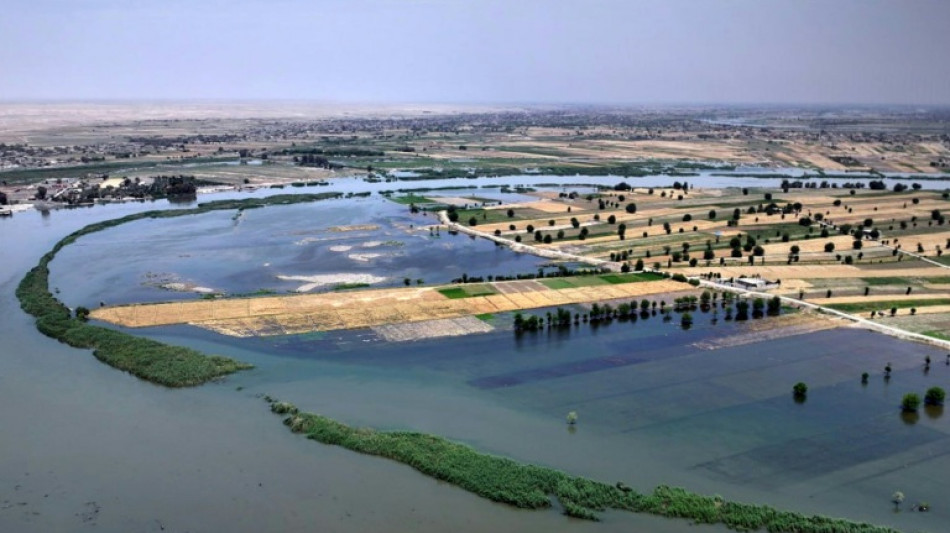
Flooding in north and east Syria as Euphrates level rises / Photo: - - SANA/AFP

Syria's energy ministry warned on Thursday of rising water levels on the Euphrates River after flooding in the north and east following increased flows from neighbouring Turkey and recent rains.
The ministry said it was monitoring the situation on the Euphrates "in light of the significant and unprecedented increase in water flows from the Turkish side".
It said the increase was due to "the abundance of the current rainy season and the opening of floodgates at dams located along the river in Turkish territory".
A statement said government water authorities in Deir Ezzor, Raqa and Aleppo provinces had announced a "state of emergency" and were taking precautionary measures.
State news agency SANA reported flooding in urban and rural areas of Deir Ezzor province on Thursday, where an earthen bridge was submerged.
It had said several bridges in the province were out of service on Wednesday because of flooding which also affected farmland and homes, and had also reported flooding in neighbouring Raqa province.
Turkish local media, quoting the regional water authority, reported "controlled water releases" from the Ataturk Dam after a rise in water levels due to heavy rainfall in recent months, with the spillway gates opened for the first time in seven years.
The Ataturk facility is one of Turkey's three major dams and was built to generate electricity and irrigate the region along the border with Syria.
The energy ministry in Damascus said that according to authorities managing the country's Euphrates Dam, Syria's dam storage capacities were almost full, "necessitating the continued release of large quantities of water".
Late Wednesday, the ministry posted an image showing the opening of the Euphrates Dam floodgates, saying they had not been used for around 40 years, and warned people to exercise caution.
D.al-Shehri--al-Hayat