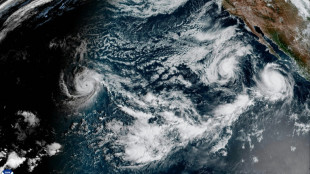
Weather pattern El Nino is here and could reach historic intensity / Photo: MARTIN BERNETTI - AFP

The phenomenon El Nino has arrived, the US weather agency said Thursday, and scientists expect the pattern synonymous with droughts, floods and soaring temperatures will intensify into the end of the year, potentially to historic strength.
El Nino is a natural climate occurrence that warms surface temperatures in the central and eastern equatorial Pacific Ocean, bringing worldwide changes in winds and rainfall patterns and erratic weather.
Scientists fear it will exacerbate the heat of a planet already warming from burning fossil fuels, while amping up weather extremes.
"El Nino is here, and it could be one for the history books," said meteorologist Haley Thiem in an explainer video from the US National Oceanic and Atmospheric Administration.
In its latest advisory, scientists at NOAA said there is a 63 percent chance "of a very strong El Nino during November-January that would rank among the largest El Nino events in the historical record going back to 1950."
Every El Nino is different, but major events often follow familiar patterns. This includes drought across parts of the Amazon, Indonesia and Australia, disrupted monsoons in India, and shifting rainfall throughout the tropics.
It typically takes place every two to seven years and lasts around nine to 12 months.
El Nino tends to peak late in the year but heat in the oceans releases more slowly into the atmosphere, pushing up global temperatures the following year.
In response to the forecast, Marc Alessi of the Union of Concerned Scientists said "the combination of fossil fuel-caused climate change and a potential super El Nino event makes a terrible team," saying it could "easily" push global temperatures to record levels.
"While El Nino is a naturally occurring phenomenon, there is evidence that fossil fuel-caused climate change is making El Nino events more intense," he said in a statement to AFP.
- 'Deadly siren' -
Mohamed Adow, director of the Nairobi-based climate and energy think tank Power Shift Africa, said for millions of people across the globe "it's not just another weather forecast" but a "deadly siren to be feared."
"It means failed rains, dying crops, rising food prices, and families pushed to the edge yet again."
Governments across the dry countries of Central America have raised alert levels over El Nino.
In that region known as the "Dry Corridor" -- including parts of Guatemala, Honduras, El Salvador and Nicaragua -- El Nino's return has triggered fears of drought and stoked concerns of famine.
The Guatemalan government, for example, says it has 1.1 million rations ready to distribute in the face of a food security emergency.
In East Africa, Adow said the extremes will likely strike "communities already battered by droughts and floods in recent years.
Predictions from elsewhere in the world mirror those of NOAA, anticipating a particularly strong El Nino.
"The odds are strongly in favor of a moderate to strong, or probably strong to record-breaking, event at this stage," Carlo Buontempo, the director of Europe's Copernicus Climate Change service, told AFP.
Earlier this month, UN chief Antonio Guterres urged the world to treat the likely intense incoming weather "as the urgent climate warning it is."
"El Nino conditions will pour fuel on the fire of a warming world," he said.
"The only effective response is climate action equal to the crisis -- ending the addiction to fossil fuels, accelerating the shift to renewables, protecting the most vulnerable, and delivering early warning systems for all."
R.al-Mansour--al-Hayat