Nepali rescuers buoyed by miracle finds but tough conditions persist / Photo: Pedro PARDO - AFP

Nepali rescuers faced challenging conditions on Sunday as search operations after catastrophic floods entered their 12th day, buoyed by the extraordinary rescues of four survivors.
The glacial and mountain collapse on the China-Nepal border has killed at least 1,372 people and left more than 5,500 missing across the two countries.
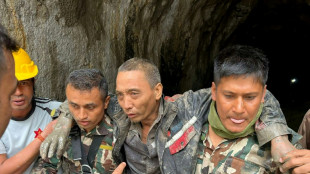
Rescuers found two more people alive on Saturday, joining two saved the day before in what have been described as miraculous tales of survival.
Three of those have been found in hydropower tunnels where the government initially said it believed more than 100 workers could be alive.
"Search and rescue is going on at the tunnels despite geography, adverse weather and lack of connectivity," Energy Minister Biraj Bhakta Shrestha told AFP.
Rescue workers were experiencing "multiple challenges", he said.
The wall of icy water and debris tore through mountain districts on August 26, destroying roads, bridges and other infrastructure.
On Saturday, rescuers pulled a Chinese man alive from deep inside a hydropower tunnel, and a 64-year-old Nepali woman, Chandrika Shrestha, from her mud-covered home.
Prime Minister Balendra Shah said the latter rescue had "given hope to the entire nation".
A day earlier, two Nepali hydropower workers were rescued at the Trishuli 3A tunnel, where searches continue alongside multiple other sites, with at least 12 hydropower projects affected.
Biraj Bhakta Shrestha said work was continuing to restore electricity in several areas.
"Places that have unreachable, we've tried to restore power with solar," he told AFP.
Foreign Minister Shisir Khanal has called the disaster a "Himalayan tsunami" and has warned reconstruction costs could run into the billions of dollars.
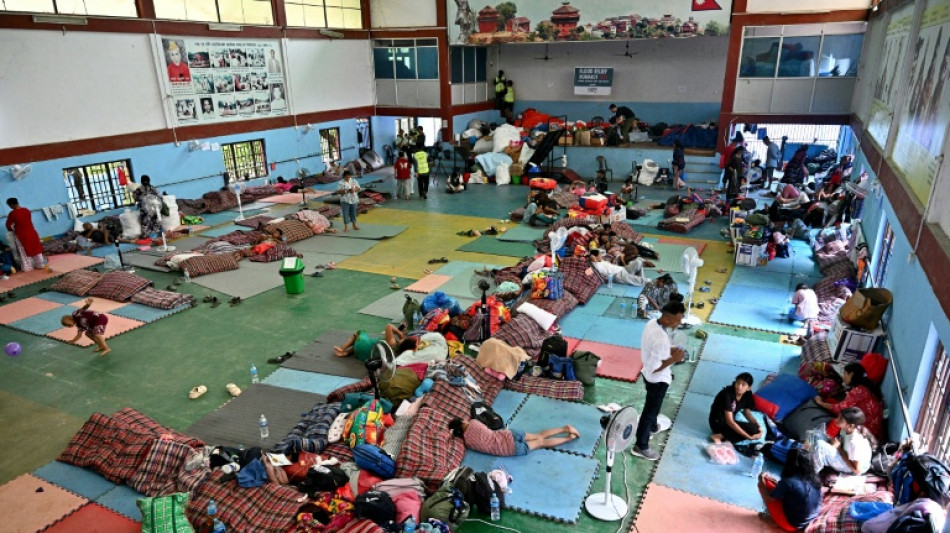
The United Nations has said the magnitude of the destruction makes delivering aid an immense challenge, and has launched a $50 million appeal to help more than 84,000 people.
With mortuaries overflowing, Nepal has buried hundreds of bodies in mass graves, after taking DNA samples for future identification, according to the police.
Only around 100 bodies have been identified and handed over to families.
Nepal will hold a national day of mourning on Monday, the 13th day since the disaster, in line with a traditional period of mourning in Hindu rituals.
While the exact cause of the glacial collapse is unclear, climate change is accelerating glacial melting worldwide, increasing the risk of such disasters.
In Nepal, rescuers have retrieved 1,341 bodies, while around 4,996 people remain missing, according to the disaster agency.
Chinese state media report that 31 people have been killed and 531 are missing in Tibet.
The combined toll is 1,372 dead and more than 5,500 missing, including around 800 foreigners, among them tourists and pilgrims.
X.Ajmi--al-Hayat