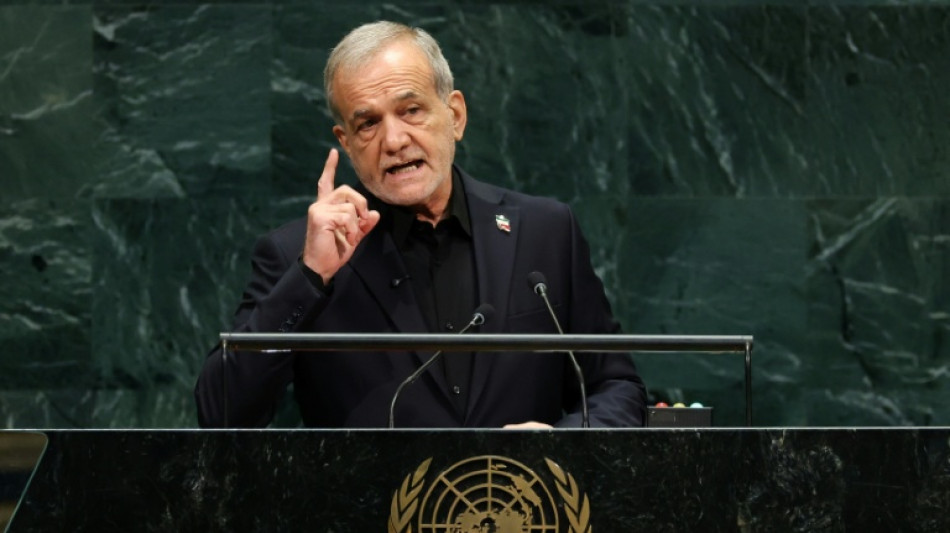
US 'must choose' whether to end war: Iran president to Fox News / Photo: TIMOTHY A. CLARY - AFP/File
It is for the United States to choose whether to end its war in Iran as Tehran does not wish to continue fighting, Iranian President Masoud Pezeshkian told Fox News in an interview aired Thursday.
Pezeshkian took a defiant stand at the UN Wednesday, for which he travelled to New York, telling the world that Iran would not "bend at the knee" to Washington -- even as US President Donald Trump acknowledged ongoing US-Iran talks.
"When we can resolve issues through dialog, we shouldn't resort to killing one another. But with the instigations conducted by Israel, they have imposed this war on us," he said in remarks translated by the broadcaster.
"But we do not wish to continue. It's America that must choose whether it wants to end this or not."
Pezeshkian insisted Iran was ready to strike a deal with Trump to end the conflict.
"Why is it that within two weeks after the signing of an agreement, they chose to blow it up?" he said of the collapse of a shaky ceasefire.
"If the current American government, within international legal frameworks, wishes to reach an agreement, fine. If not, before the (US midterm) elections or after the elections, what difference does it make for us?"
Iranian Foreign Minister Abbas Araghchi took part in a meeting with Trump's roving envoy Steve Witkoff and son-in-law Jared Kushner on the sidelines of the UN General Assembly in New York. Their talks did not immediately yield a breakthrough.
- Houthi backers? -
As violence raged between Yemen's Houthi militant movement -- widely seen to be Iran-backed -- and Saudi Arabia and its Yemeni allies, Pezeshkian insisted the Houthis do not take direction from Tehran's government.
Washington and its allies including Saudi Arabia, and the Saudi-backed Yemeni government, accuse Iran of backing the Houthi militant movement that is raining ballistic missiles on the kingdom, and battling Riyadh-backed forces for control of Yemen.
"The Houthis are responsible for their own actions. They don't take directions from us as those who are resisting in the region, based on the situations that have been imposed on them," Pezeshkian said, according to the broadcaster's translation of his remarks.
"We have contacts with them. There is no systematic relationship," he added.
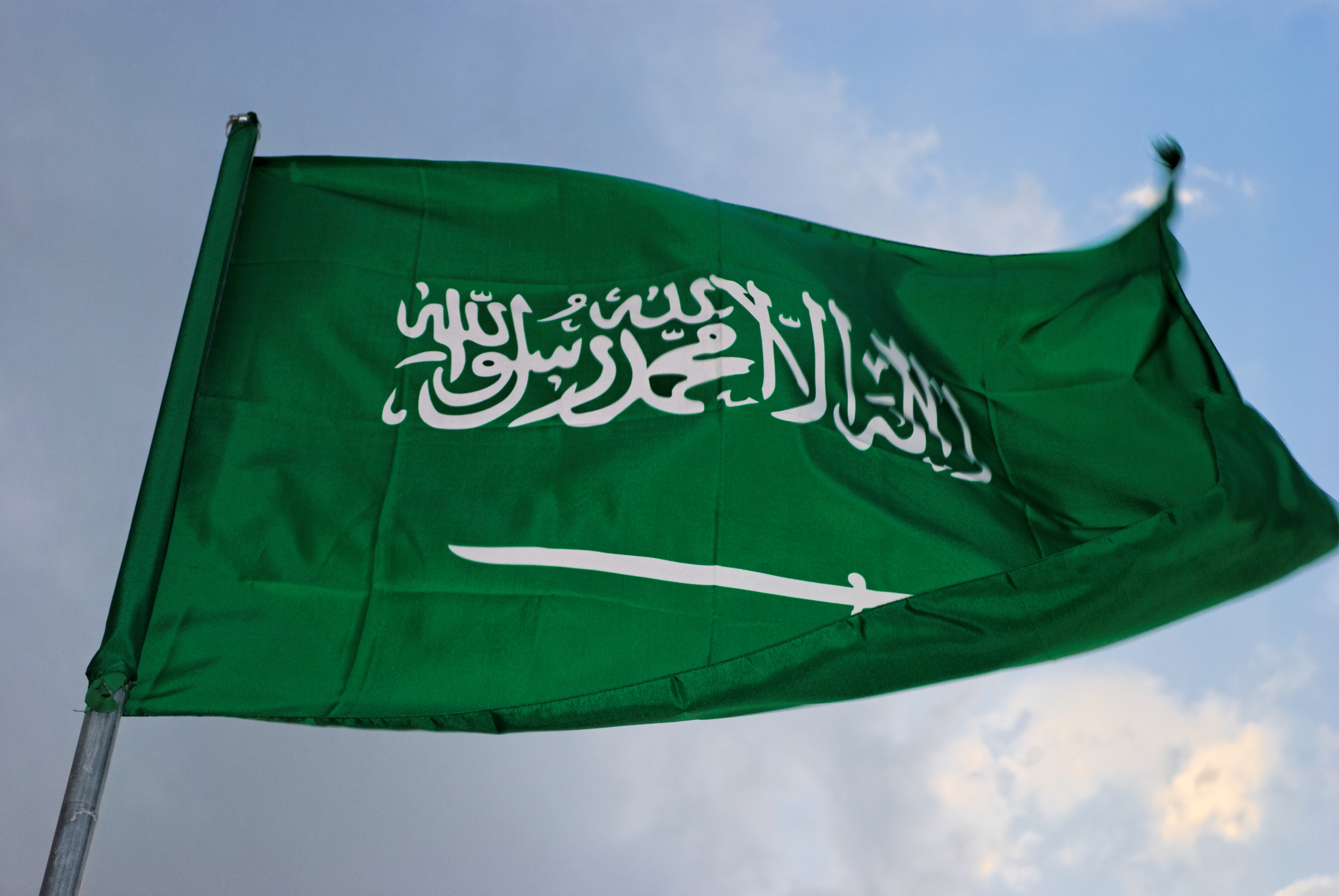
Saudi Arabia intercepted Houthi ballistic missiles on Thursday after issuing warnings for several regions including Mecca.
The Houthis have imposed a naval blockade on Saudi Arabia, hitting its tankers and territory and seizing swathes of Yemen's Red Sea coast, which is vital for Saudi oil exports, causing energy prices to jump.
Their gains cemented the hold of Iran and its allies on the two waterways that the wider Gulf, including top crude exporter Saudi Arabia, relies on to ship out its oil and other fuel products.
J.Hammad--al-Hayat