Iran crackdown fears grow as protests persist / Photo: - - UGC/AFP
Rights groups expressed alarm on Saturday that Iranian authorities were intensifying a deadly crackdown under cover of an internet blackout on the biggest demonstrations in the Islamic republic in over three years after another night of mass protests.
The two weeks of protests have posed one of the biggest challenges to the theocratic authorities who have ruled Iran since the 1979 Islamic revolution, although supreme leader Ayatollah Ali Khamenei has expressed defiance and blamed the United States.
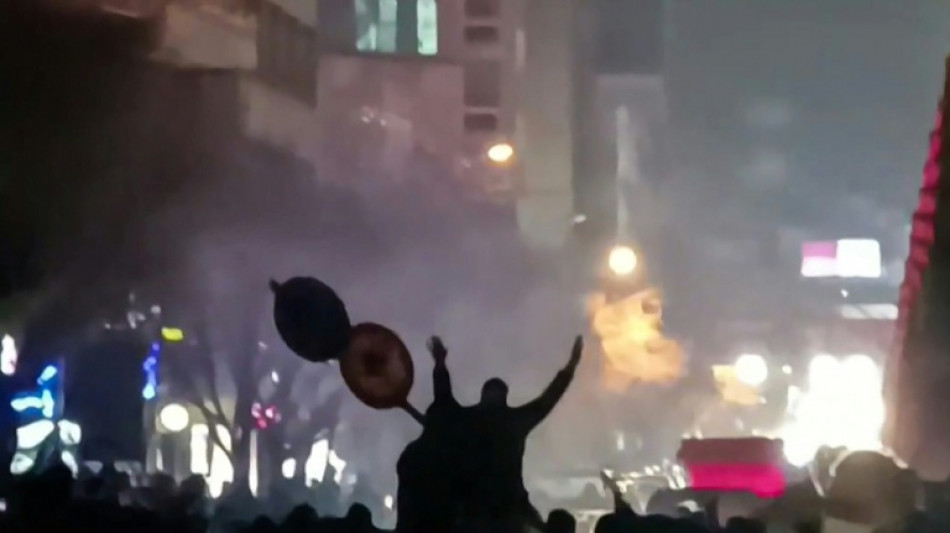
Following the movement's largest protests yet on Thursday, new demonstrations took place late Friday, according to images verified by AFP and other videos published on social media.
This was despite an internet shutdown imposed by the authorities, with monitor Netblocks saying early Saturday that "metrics show the nationwide internet blackout remains in place at 36 hours".
Amnesty International said it was analysing "distressing reports that security forces have intensified their unlawful use of lethal force against protesters" since Thursday in an escalation "that has led to further deaths and injuries".
Iranian Nobel Peace Prize winner Shirin Ebadi warned on Friday that security forces could be preparing to commit a "massacre under the cover of a sweeping communications blackout".
Norway-based Iran Human Rights group has said at least 51 people have been killed in the crackdown so far, but warned the actual toll could be higher.
It posted images it said were of corpses of people shot dead in the protests piled on the floor of Alghadir hospital in eastern Tehran.
"These images provide further evidence of the excessive and lethal use of force against protesters," IHR said.
Iranian authorities are using the "most blatant tools of repression", prize-winning filmmakers Mohammad Rasoulof and Jafar Panahi said.
- 'Seize city centres' -
In Tehran's Saadatabad district, people banged pots and chanted anti-government slogans including "death to Khamenei" as cars honked in support, a video verified by AFP showed.
Other images disseminated on social media and by Persian-language television channels outside Iran showed similarly large protests elsewhere in the capital, as well as in the eastern city of Mashhad, Tabriz in the north and the holy city of Qom.
In the western city of Hamedan, a man was shown waving a shah-era Iranian flag featuring the lion and the sun amid fires and people dancing.
In the Pounak district of northern Iran, people were shown dancing round a fire in the middle of a highway, while in the Vakilabad district of Mashhad, a city home to one of the holiest shrines in Shiite Islam, people marched down an avenue chanting "death to Khamenei".
Reza Pahlavi, the US-based son of Iran's ousted shah, hailed the "magnificent" turnout on Friday and urged Iranians to stage more targeted protests on Saturday and Sunday.
"Our goal is no longer just to take to the streets. The goal is to prepare to seize and hold city centres," Pahlavi said in a video message on social media.
- 'Big trouble' -
Pahlavi, whose father Mohammad Reza Pahlavi was ousted by the 1979 revolution and died in 1980, added he was also "preparing to return to my homeland" at a time that he believed was "very near".
Authorities say several members of the security forces have been killed, and Khamenei in a defiant speech on Friday lashed out at "vandals" and accused the United States of instigating the protests.
On Thursday and Friday, an AFP journalist in Tehran saw streets deserted and plunged into darkness ahead of any protests.
On Valiasr avenue, one of Tehran's main streets, businesses were shutting unusually early.
"The area is not safe," said a cafe manager as he prepared to close at around 4:00 pm.
An AFP reporter saw shop windows broken, as well as security forces deploying.
State TV on Saturday broadcast images of funerals for several members of the security forces killed in the protests, including a large gathering in the southern city of Shiraz.
It also aired images of buildings, including a mosque, on fire.
Iran's army said in a statement that it would "vigorously protect and safeguard national interests" against an "enemy seeking to disrupt order and peace".
National security council chief Ali Larijani said in comments broadcast late Friday that "we are in the middle of a war", with "these incidents being directed from outside".
The Norway-based Hengaw rights group said it had confirmed five Kurdish men had been shot dead by security forces in the western city of Kermanshah on Thursday and another man, a former bodybuilding champion, killed in the northern city of Rasht on Friday.
On Saturday, the start of the working week in Iran, one man in Tehran said he was unable to check his work email.
"This is the price to pay before the victory of the people," he said.
US President Donald Trump again refused on Friday to rule out new military action against Iran after Washington backed and joined Israel's 12-day war against the Islamic republic in June.
"Iran's in big trouble. It looks to me that the people are taking over certain cities that nobody thought were really possible just a few weeks ago," Trump said.
Y.Saleh--al-Hayat