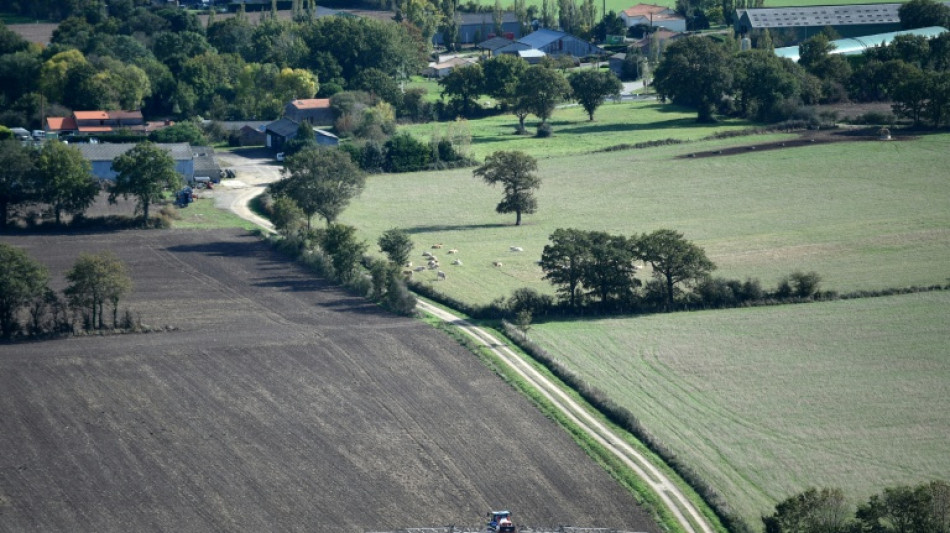
EU under pressure as fertiliser costs soar on Middle East war / Photo: JEAN-FRANCOIS MONIER - AFP
With the war in the Middle East sending global fertiliser prices soaring, the EU is coming under pressure from farmers and some member states to take action.
Agriculture sector representatives are due in Brussels for talks with the European Commission on April 13, as many complain the conflict risks plunging an already strained industry into a deeper crisis.
"The situation is very dire," lamented Amaury Poncelet, a cereal farmer in central Belgium.
This winter he bought fertilisers for 380 euros ($439) a tonne, up from 330 euros last summer, he noted. "And since things flared up in Iran, prices are going further up," he told AFP.
About a third of fertilisers shipped by sea reach the global market through the Strait of Hormuz that Iran has effectively closed in retaliation against US-Israeli strikes.
That sent prices up, with the UN expressing concern in particular about the impact on developing countries.
In Europe, the price of nitrogen fertilisers, which are derived from gas, has risen by around 20 percent over the past month, and is approaching 500 euro per tonne -- a one-two punch for farmers already facing higher costs because of the war in Ukraine.
Cereal producers, who need vast amounts of the stuff, have been hit particularly hard, said Luc Vernet of Farm Europe, an agriculture sector think tank.
"They haven't been able to make a living for the past three years," he said.
In France alone, about 300,000 hectares of land once used for cereal farming has been left fallow or abandoned since 2022, he said.
- 'Strategically important' -
Brussels, which has slapped high tariffs on fertilisers from Russia -- a major producer -- with plans to end imports by 2022 in a bid to hit Moscow's war coffers, has found itself again the target of requests for help.
France and farmers groups are pushing for a pause in the application of the EU's carbon border tax on fertilisers.
But the commission, which has promised an action plan for May, has so far ruled that out.
Supporters point out that the levy targets carbon-intensive imports to level the playing field for European industries subject to strict emissions rules, noting their development is key if Europe wants to avoid a similar crisis in the future.
The crisis sparked by the Iran war has made it "clear that maintaining strong domestic fertiliser production is strategically important for Europe", said Fertilizers Europe, an industry group.
A commission spokeswoman said the EU executive was continuously monitoring prices and has already "taken several measures to help farmers with affordability of fertilisers".
These included suspending duties on all imports with the exception of those from Russia and Belarus and adjusting the carbon border tax to soften its impact, she said.
Its May plan will be addressing "structural vulnerabilities and market imbalances" and look to boost domestic production, including low-carbon alternatives.
But there is a long way to go before these can become a competitive reality.
Some such green projects have been abandoned as too costly and others are in the initial stages, said Vernet.
I.al-Ghamdi--al-Hayat