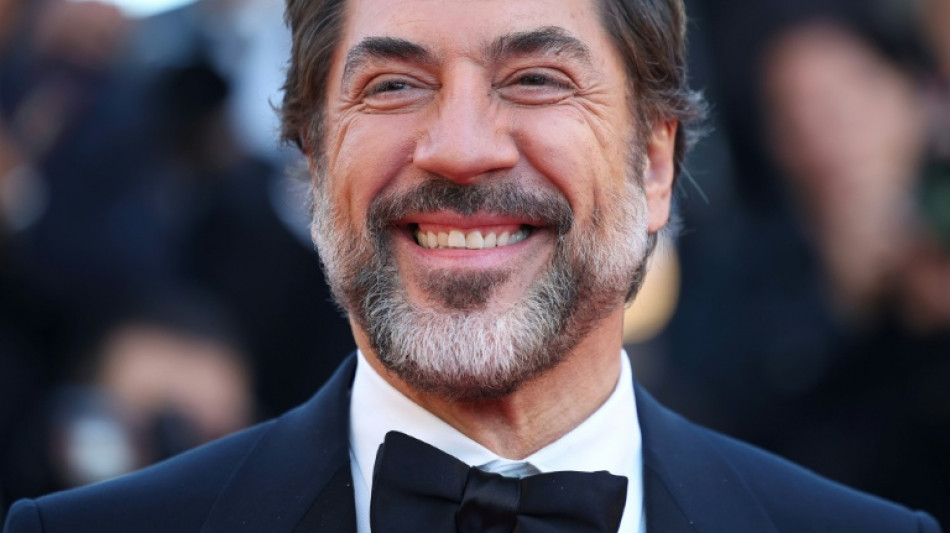
Spanish star Javier Bardem says 'narrative changing' on Gaza / Photo: Valery HACHE - AFP

Outspoken Spanish star Javier Bardem told AFP he was "getting more work than ever" despite his public campaigning against Israel's war in Gaza, something he attributed to "the narrative changing" around the conflict.
At the last Oscars ceremony in February, the openly political star of "No Country for Old Men" used his time presenting the award for best international feature film to state: "No to war and a free Palestine."
Acclaimed actress Susan Sarandon, a fellow pro-Palestinian campaigner, as well as other less known figures have complained about their work drying up after their statements condemning Israel's actions in Gaza and the occupied West Bank.
"I think it's important to be able to express your point of view, knowing that there will be people who agree and people who don't," Bardem told AFP at the Cannes Film Festival where he is starring in "The Beloved" by Spanish director Rodrigo Sorogoyen.
- Claims of 'blacklisting' -
Scottish-born screenwriter Paul Laverty, a member of the Cannes jury this year, accused Hollywood of blacklisting film figures such as Sarandon, Bardem and Mark Ruffalo over their politics.
"It doesn't worry me because I'm lucky enough to be able to work. I'm lucky to be in a place where I can express myself knowing that I have job offers. I imagine there are people who are more afraid they won't get called because of it, but that's not my case," Bardem, 57, said.
"In fact, it's the opposite, they're calling even more because the narrative is changing," said the Oscar winner. "Now it's no longer as controlled by those who have always controlled it.
"Instead we now understand that there are consequences when you support or justify a genocide like the one that is happening. And society knows that," he said.
Bardem delivers a five-star performance of warmth and quiet menace In "The Beloved", which sees him play a famous film director who returns to Spain after years in the United States to shoot a film with his estranged actress daughter (Victoria Luengo).
The film, which premiered on Saturday, tackles Spain's former colonial occupation of Western Sahara, a territory that is disputed by Morocco and the pro-independence Sahrawis of the Polisario Front.
It also sees Bardem explore issues around male domination and patriarchy.
"You have to be aware of what you, as a man, do and say... and not take for granted that many of the things we were indoctrinated with have to remain in force. They were wrong," said Bardem, husband of Spanish star Penelope Cruz, with whom he has two children.
D.Zahrani--al-Hayat