OECD cuts 2026 global growth forecasts over Mideast war fallout / Photo: JOEL SAGET - AFP/File

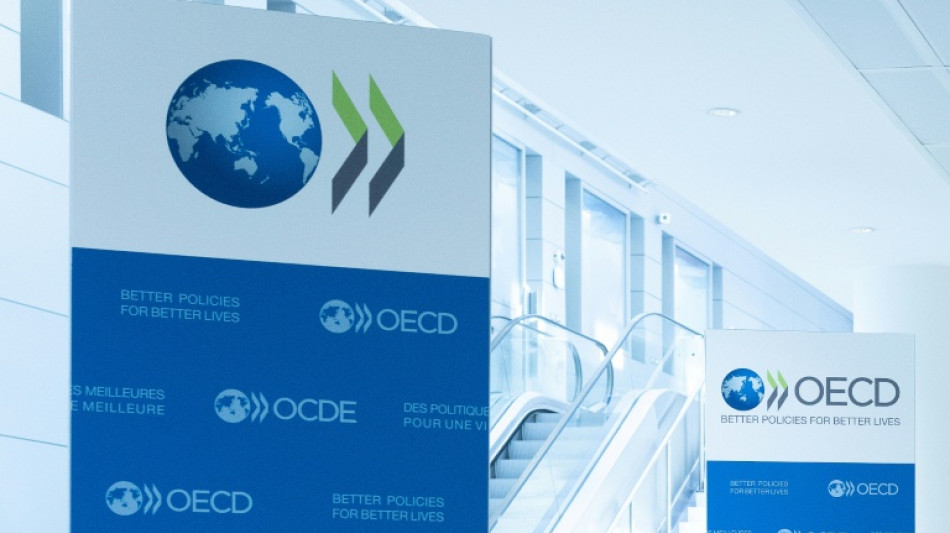
The war in the Middle East has dented economic growth prospects worldwide, with a more severe shock likely if no effective ceasefire is agreed before 2027, the OECD warned Wednesday.
Global economic growth is now forecast to slip to 2.8 percent for 2026 if Gulf exports of oil and gas return to pre-conflict levels in the third quarter, the group of 38 industrialised countries said in its quarterly update.
Previously the OECD had forecast full-year global growth of 2.9 percent.
But if the Mideast war continues into next year, however, global growth could slow to 2.1 percent, the OECD said -- well below the average annual growth of 3.4 percent seen from 2013 to 2019, before the Covid pandemic.
"The longer the disruptions last, the larger the economic and social costs become," the group's chief economist Stefano Scarpetta said in the report.
Many countries would risk falling into recession, he noted, and a drop in investment spending -- "including in energy-intensive AI" -- would likely push up unemployment.
Sustained high prices for energy as well as fertiliser and other key products from hydrocarbon production in the Gulf would weigh especially hard on developing countries that have "higher shares of energy and food in household consumption".
Even if the war sparked by US and Israeli strikes on Iran in late February ends in the coming weeks, the OECD forecast global inflation rising to 4.0 percent this year from 3.4 percent in 2025.
In this "time-limited disruption scenario", the group expects US growth to slow to 2.0 percent this year and 1.8 percent in 2027, after growing 2.1 percent last year.
In the eurozone, where many countries are highly dependent on energy imports, GDP growth will slump to 0.8 percent this year after 1.4 percent last year, assuming a Mideast ceasefire is secured in the coming weeks.
mpa/jbo/js/yad
U.al-Balawi--al-Hayat