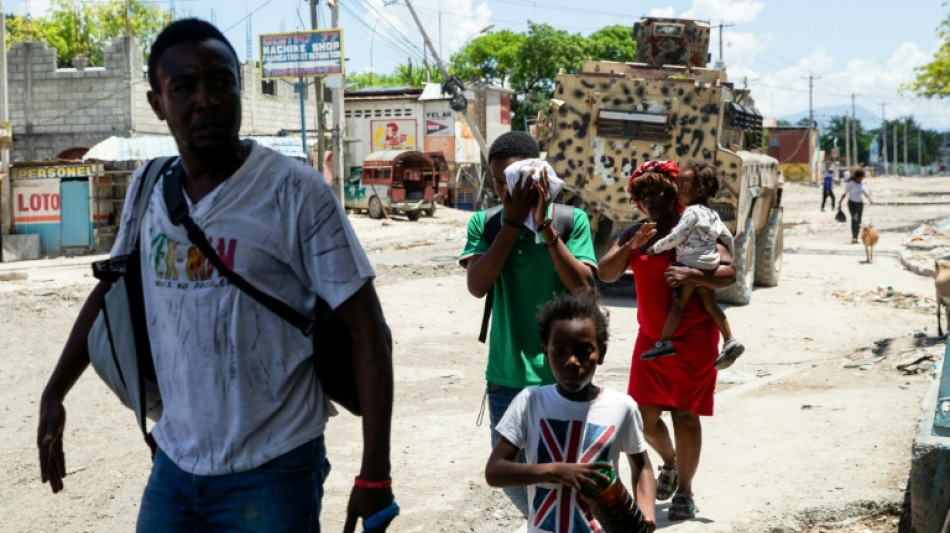
Nearly 1.5 million displaced in Haiti: UN / Photo: Clarens SIFFROY - AFP/File
Some 1.47 million people are displaced in gang-ravaged Haiti, the United Nations' migration agency said Friday, warning that its ability to help could dry up within months.
Haiti, the poorest country in the Americas with a population of 12 million, has for years been plagued by instability as powerful gangs carry out rampant killings, rapes, looting and kidnappings.
The UN's International Organization for Migration said its updated count reflected the worsening humanitarian crisis in the Caribbean country.
The IOM said armed attacks were no longer confined to regular hotspots and were now increasingly affecting areas that had previously served as places of refuge, leaving vulnerable people with few safe options.
"Nearly 1.47 million people remain displaced in the country," Gregoire Goodstein, the IOM chief of mission in Haiti, told a press briefing in Geneva.
"The violence is no longer contained: it is expanding."
The IOM said the number of internally displaced persons (IDPs) now amounted to 12 percent of the Haitian population.
More than half of those displaced are women and girls, the agency said.
The IOM said that in May renewed violence in the Cite Soleil area of Port-au-Prince displaced more than 18,000 people in a matter of days, pushing the number of IDPs in the capital above 300,000 for the first time on record.
"What we are seeing is the permanent simultaneity of hardship, armed violence, mass displacement, acute food insecurity, forced returns at scale, climate hazards, and institutions under pressure at every level... each one making the others worse," Goodstein explained.
-'Despair' -
The chief of mission said more than 270,000 Haitians abroad were forcibly returned to the country in 2025, and this year so far another 110,000 have arrived.
Goodstein said that a quarter of those were women, while nearly 10 percent were children, including unaccompanied minors and newborns.
"For some, this is the first time in decades, or even in their lives, that they have returned to the country," he said.
Since December, nearly 95,000 people have been newly displaced, while more than 78,000 returned to their areas of origin.
"We cannot assert that these returns are sustainable, but they are a signal, and signals require investment to become something lasting," Goodstein said.
However, he said funding constraints "now threaten our ability to remain operational beyond October".
"Without predictable, sustained support to our crisis response plan, our capacity to respond is at stake."
Furthermore, the Atlantic hurricane season started on June 1 and will run to the end of November.
"We can expect displacement sites and cities to flood. Every gap in our response is a gap that armed groups, trafficking networks and despair will fill," Goodstein said.
"Short-term relief alone cannot meet the scale or persistence of this crisis, which has now been going for nearly five years," he added.
G.Hazmi--al-Hayat