Pakistan pressures Afghans in border province to leave / Photo: Abdul MAJEED - AFP
Members of Afghan settlements in Pakistan's Khyber Pakhtunkhwa border province hurriedly packed up belongings this week while others hid at home as police launched a "large-scale crackdown" on undocumented residents.
Authorities in the northern province carried out housing demolitions, roadside identity checks and told Afghans to leave as part of a broader government pushback, community members and officials said.
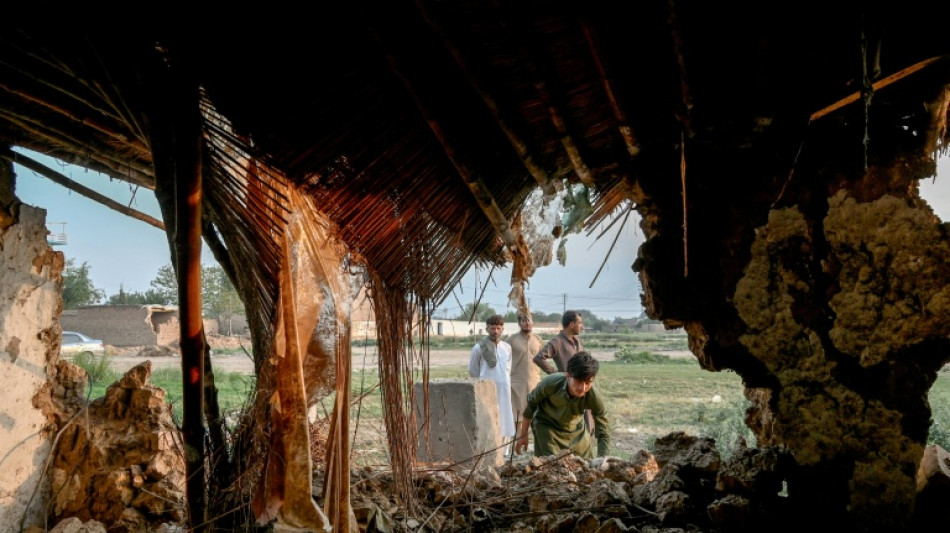
Residents of Mattani, a short drive from the provincial capital Peshawar, told AFP that authorities had demolished many of the Afghan settlement's 200 houses in July.
Najeeb Rehman, 50, said he first tried to retrieve his father's medication and children's school certificates from his home.
"But the officers didn't listen to us and just said to demolish the house," he said, in the remains of the settlement where the walls of many homes were now in rubble.
Young men nearby loaded household belongings including beds and solar panels into trucks to cross the border.
In June, Pakistan's interior ministry ordered law enforcement nationwide to arrest Afghan citizens without visas from July 10.
The ministry did not immediately respond to a request for comment on the demolitions.
"A large-scale crackdown against undocumented Afghan nationals began on July 10 and is still ongoing," a senior police officer in Peshawar told AFP on condition of anonymity.
"Even before the federal government issued clear directives, police had completed the mapping of Afghan nationals across all parts of the province," the official said.
Though millions of Afghans have returned from Pakistan since the security-driven repatriation drive began in 2023, much of the earlier effort focused on centres such as southern megacity Karachi and the capital Islamabad.
Khyber Pakhtunkhwa's population of around 40 million has deep cultural, linguistic and historic ties with Afghanistan, and many families span both sides of the border.
Police and officials said they warned Afghan residents before July 10 they must leave, including through mosque loudspeakers and meetings with community elders.
But some said they had few options.
"The police don't consider anyone's circumstances. They don't care whether I have any money in my pocket or not. They don't take my health into account either," said Ahmad Mula, 70, whose home in Mattani was demolished.
"The police have made announcements at least twenty times, but we have our own hardships and circumstances," he said.
The crackdown exacerbates the years-long repatriation policy that UN figures show has pushed back 2.3 million Afghans -- some who lived in Pakistan for decades and others who fled their home country following Taliban authorities' return to power in 2021.
UN data showed almost 6,200 Afghans returned from Pakistan in the seven days to July 11, up by around a third from the previous week.
Pakistan remains home to more than a million Afghans, according to the UN.
- Hidden at home -
An AFP reporter in Peshawar this week witnessed police setting up temporary checkpoints across the city, where officers checked identity documents of passers-by.
"We have been issued strict instructions regarding the arrest of undocumented Afghan nationals," an officer at one of the checkpoints told AFP.
In Peshawar's Board Bazaar market, known as "Mini Kabul" and home to thousands of shops run by Afghans, owners said they had seen a downturn in customers and feared arrests.
"People have hidden in their homes and business has come to a standstill," said Zabi Ullah, a businessman at the market.
Four decades of war sent millions of Afghans into neighbouring Pakistan. Hundreds of thousands more arrived since 2021, many waiting in hopes of resettling in countries whose militaries they had once assisted.
Pakistan, facing growing attacks, announced in 2023 it would begin deporting undocumented foreigners and has this year carried out airstrikes on Afghanistan it says target militants.
The Taliban government has repeatedly denied Afghanistan's territory is used for militancy and said the attacks killed civilians.
R.al-Mansour--al-Hayat