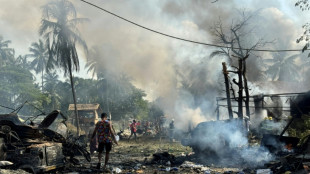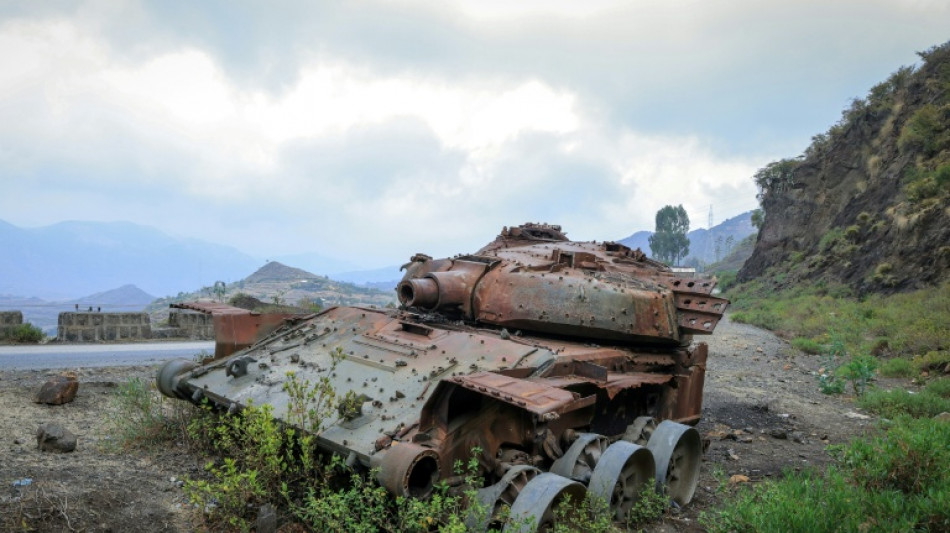
Is a new conflict brewing in northern Ethiopia? / Photo: Abel Gerezgiher - AFP

A recent flare-up in tensions in Ethiopia's Tigray, including reports of heavy artillery battles and drone strikes, has raised fears of a return to war in the northern state -- a conflict potentially stoked by foreign nations.
- What's the situation? -
For several months, the Ethiopian federal army (ENDF) and Tigrayan forces (TDF) have been massed on either side of the Tigray border.
This buildup comes as animosity grows between Prime Minister Abiy Ahmed's federal government and the region's rebel authorities -- led by the Tigray People's Liberation Front (TPLF), a now-outlawed party that governed Ethiopia from 1991 to 2018.
Each side accuses the other of seeking to trigger a new conflict, following the devastating 2020-2022 war that claimed at least 600,000 lives.
The Pretoria peace agreement ended the fighting and maintained an uneasy calm until late 2025, when fresh clashes between federal troops and Tigrayan forces erupted.
- What's happened since? -
On August 1, the TPLF accused the ENDF of attacking its forces at Shererina, near the Sudanese border, using heavy artillery.
Ethiopia has not publicly commented on these clashes, however, the NGO ACLED -- which specialises in conflict monitoring -- confirmed the incidents.
On Monday, the TPLF reported drone strikes targeting Tigrayan soldiers in the region's south.
A local medical official told AFP at least four Tigrayan fighters had been wounded.
- What does it mean? -
Cameron Hudson, an analyst at the Center for Strategic and International Studies (CSIS) in Washington, said recent troop movements "increases the likelihood of a new conflict".
Jalale Getachew Birru, an analyst at ACLED, estimates that in early 2024, Tigrayan forces numbered around 270,000 soldiers.
"However, there is no information on the TDF's current size, as it is still actively recruiting," notably through forced conscription, she said.
Meanwhile, the federal government began producing drones a year ago -- a weapon that observers say enabled it to halt the TDF's advance on Addis Ababa in 2021.
"The TPLF seems to be entering a possible conflict in a much weaker position than during the last war. It is relying a lot more on foreign actors," said Hudson.
- Which actors? -
TPLF Vice President Amanuel Assefa told AFP the group is ready to collaborate with "anyone fighting the Ethiopian federal government".
Ethiopian authorities have accused the TPLF of allying with neighbouring Eritrea and with the Fano militia, from the neighbouring Amhara region, who took up arms against Addis Ababa in 2023.
Eritrea and the Fano -- historical enemies of the TPLF -- backed the federal army against the group during the previous conflict, before animosity toward Abiy led to a shift in alliances.
- Who else? -
"What worries me more is that, compared to the previous war in Tigray, there are a lot of new outside actors which can drive this conflict," said Hudson.
The Sudanese army, which has been battling the paramilitary Rapid Support Forces (RSF) since 2023, accuses Ethiopia of allowing the RSF to operate in Sudan from Ethiopian territory.
Addis Ababa has never responded to these accusations.
Meanwhile Egypt has been at loggerheads with Ethiopia since the construction of a massive dam on the Nile, which Cairo views as an "existential threat".
"The previous war was contained on Ethiopian soil; if there is a new conflict, it will likely pull in neighbouring states like Sudan and Eritrea," said Kjetil Tronvoll, a regional specialist at Oslo New University College.
"It will be Africa's second world war," he said, alluding to the 1998-2003 Congo war that involved nine African nations.
- Diplomatic options? -
Olusegun Obasanjo, the African Union (AU) special envoy for the Horn of Africa, visited the Tigrayan capital Mekelle in June.
The former Nigerian president has "initiated a process of discussions regarding the Pretoria Agreement," an African diplomat, speaking on condition of anonymity, told AFP.
The AU, which brokered the agreement, has not issued a statement on the recent clashes.
Meanwhile the United States, which helped end previous hostilities, has been conspicuously absent.
"Washington should be a key actor in easing the tensions in the region, but they are trying to satisfy everyone and pursue their narrow interests," said Hudson.
He said a fresh conflict would be "devastating" to Washington's maritime and security concerns.
"Yet we are seeing no US diplomatic effort to avoid new conflict."
U.Bakr--al-Hayat