Panama Pursues Full Mercosur Membership Amid U.S. Tariff Concerns
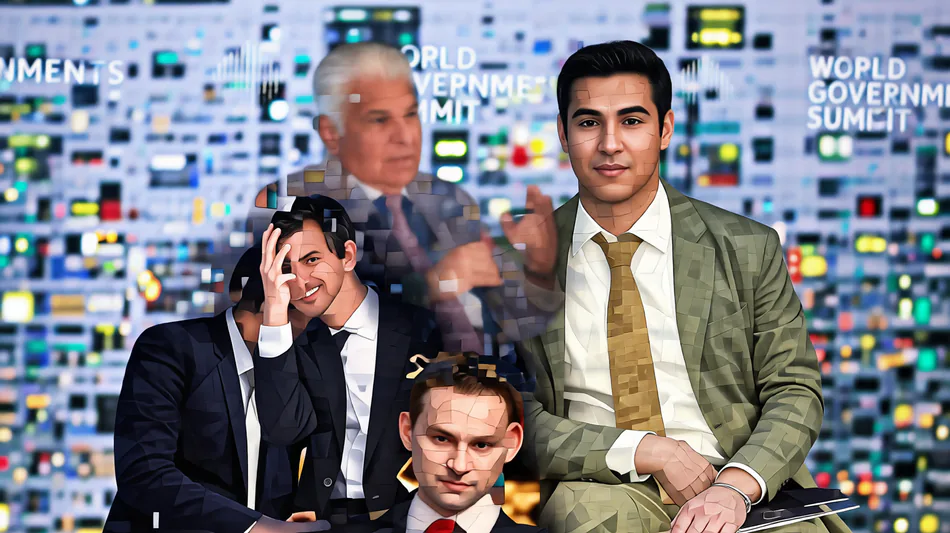
Panamanian President José Raúl Mulino has announced plans to transform his nation’s status from an associate member into a full member of Mercosur before his term concludes in 2029. Speaking at the World Government Summit, Mulino emphasized that deepening regional integration is essential for Panama’s economic future, particularly as the country navigates renewed trade tensions with the United States under the Trump administration.
Panamanian President José Raúl Mulino has declared his intention to secure full membership for Panama in Mercosur, the South American trade bloc, before his presidency ends in 2029. The announcement underscores a strategic pivot by Panama to diversify its economic partnerships and reduce reliance on traditional trade dynamics with the United States, following renewed tariff policies introduced by President Donald Trump.
Panama has held associate member status within Mercosur since December 2024, a classification it shares with several other Latin American nations including Chile, Colombia, Ecuador, Guyana, Peru, and Suriname. Transitioning to full membership requires unanimous approval from all current bloc members—Argentina, Brazil, Paraguay, Bolivia, and Uruguay—and strict adherence to Mercosur’s regulatory protocols. The accession process is protracted and uncertain; for instance, Bolivia’s journey to join began in 2015 and only concluded in 2024.
Mulino described the potential integration as "enormous and very beneficial" for Panama. He highlighted that Mercosur nations possess significant strength in agribusiness, chemicals, and natural gas, sectors he identified as critical to Panama’s economic interests. In return, Mulino argued that the bloc would gain from Panama’s privileged access to global logistics infrastructure, specifically the Panama Canal and the Colón Free Zone, which serve to attract investment and facilitate international trade.
"Mercosur countries are very large and very strong in agribusiness, chemicals, and natural gas — a range of sectors that are important to Panama," Mulino told reporters on the sidelines of the World Government Summit held in the Dominican Republic. He noted that his administration has enshrined the relationship with Mercosur into law to prevent future governments from reversing the decision.
The push for deeper integration comes against a backdrop of heightened diplomatic and economic friction between Panama and the United States. Mulino pointed to Trump’s return to the White House and the implementation of new tariff and security policies as catalysts for Panama’s search for alternative trade routes. He criticized the U.S. approach, stating that trade is no longer solely about negotiation but is often dictated by unilateral actions from larger powers.
"Trade is no longer about sitting down with the big players to negotiate trade deals. Because the big player comes along and raises tariffs on the small [country], and that’s the end of trade — as has already happened and is happening," Mulino said. He asserted that the rationale behind these tariffs lacks commercial logic, serving instead as a whim that abruptly curtails the export capabilities of smaller nations.
Despite these tensions, Mulino emphasized Panama’s historical role in diplomatic relations with the United States. He recalled that discussions on bilateral ties must be viewed through the lens of Panama’s founding and its accumulated experience in managing complex diplomatic, trade, and security relationships. While acknowledging that these ties have been "excellent, though often tortuous," he noted that uncertainty remains, particularly regarding security issues related to organized crime and drug trafficking, which he described as the most sensitive area for both countries.
Mulino positioned Panama not as a competitor to Mercosur members but as a complementary partner. "I believe that is the geographical reality we need to focus on right now. We are a transit hub. And the [logistics] hub is essential," he maintained. He expressed a vision for Mercosur to evolve from a strictly South American entity into a broader Latin American bloc, leveraging Panama’s capacity to bridge Central America and the Caribbean with the southern continent.
To advance this goal, Mulino has instructed his Minister of Commerce to represent him at the upcoming Mercosur summit in Montevideo on December 4, as he will be unable to attend. He noted that progress is already underway, particularly with Brazil, which served as Panama’s sponsor for its initial associate membership.
This diplomatic effort coincides with domestic economic transformations within Panama. The government has recently taken full control of the country’s ports and acquired all shares in the Petroterminales oil pipeline. Mulino stated these moves are designed to position Panama more firmly in the energy sector while simultaneously advancing its regional integration objectives.
"That’s where our market is," Mulino said, referring to the South American bloc. He added that joining Mercosur marks the first time in the country’s history that it has engaged in political and regional integration with the southernmost part of the continent, signaling a significant shift in Panama’s geopolitical alignment.
H.Humaid--al-Hayat