Ireland’s New Armoured Fleet Procurement Raises Capability Concerns Amidst Past Spending Failures

The Irish government’s plan to acquire a new fleet of armoured vehicles from France has sparked debate over defence spending transparency and operational readiness. Critics argue that without fixing deep-rooted logistical and maintenance issues, the billions invested in new hardware may fail to deliver the intended military capability.
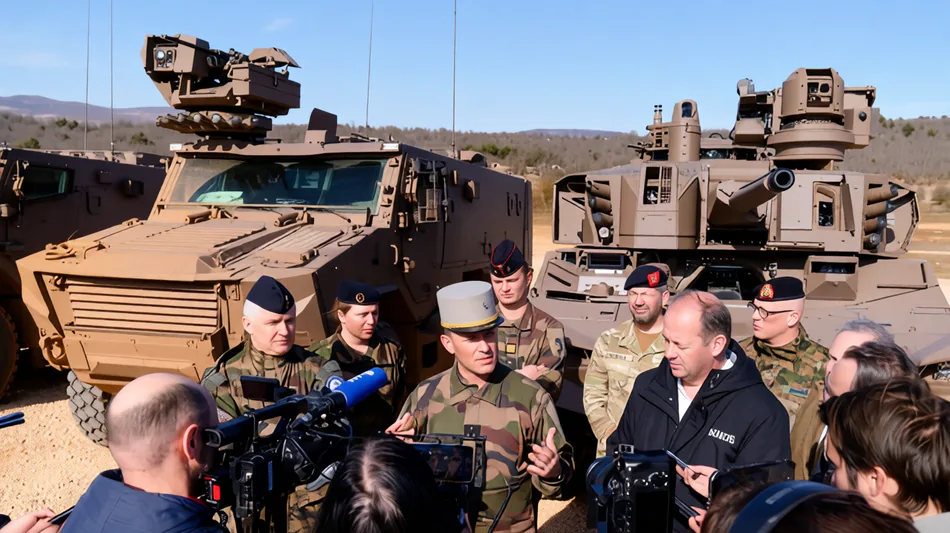
The Irish government is preparing to commit billions of euros to a new fleet of armoured vehicles, a move that has reignited scrutiny over the Defence Forces’ ability to manage large-scale procurement and maintain operational readiness. While the minister for defence announced in February that France was the preferred partner for the new fleet, with a framework agreement potentially signed by the end of 2026, significant details regarding costs and specifications remain undisclosed.
This lack of transparency mirrors historical patterns in Irish public spending, where large financial commitments are often made while the public remains unaware until controversies emerge. Similar examples include the National Children’s Hospital, which has exceeded €2.24 billion, a bike shelter at Leinster House costing €336,000, and a Dáil printer priced at €1.8 million. In each case, public anger followed the initial commitment phase, suggesting a systemic issue in how defence and infrastructure projects are communicated to taxpayers.
The current armoured vehicle procurement is described by critics as entering its "sleepwalking phase," where money may be committed within weeks without clear public justification. Defence officials have historically cited operational security to withhold specific details about weapons systems. For instance, when asked about the acquisition of Javelin anti-tank missiles from the United States, a spokesman refused to provide specifics, despite the US government having published the full deal online: 44 missiles and 36 launchers for $46 million (€41.94 million).
Concerns extend beyond transparency to practical operational capability. Ireland’s two C-295 maritime patrol aircraft, which cost more than €220 million combined, have faced significant maintenance challenges. One aircraft recently spent approximately 140 days in Seville for scheduled servicing, leaving the nation with only one operational plane. The Defence Forces have declined to disclose the frequency of such extended downtimes, a silence that suggests recurring logistical issues.
Past procurement failures further underscore these concerns. A Comptroller and Auditor General report found that RG-32M armoured vehicles purchased in 2008 for €19.6 million suffered from frequent breakdowns and minimal use, resulting in a significant loss of value. The Public Accounts Committee investigated why some vehicles recorded almost no mileage for years, to which the department’s secretary general explained that odometers had failed. While a Defence Forces spokesman claimed the vehicles were valuable in complex environments, Ukraine declined to accept them even when offered for free.
Alan Kearney, a retired senior officer and independent defence consultant, argues that Ireland must learn from these past mistakes. He contends that buying new equipment is of little value if the military organization cannot maintain basic standards. The Defence Forces face ongoing resourcing issues that should be prioritized before embarking on a multibillion-euro procurement process.
Kearney highlights a critical test for readiness: the ability to account for existing inventory. Defence Forces regulations mandate 100% inventory accuracy as an absolute standard. However, Kearney notes that unannounced inspections of military stores would reveal missing ancillaries and accessories for armour, crew-served weapon platforms, and optical devices, with no records of their loss or demands for replacement. While millions of items are physically counted and entered into the system annually by hand, industry experts consider 100% accuracy implausible.
The culture within military stores exacerbates these issues. A 2025 Defence Forces workplace survey revealed that 78% of personnel who experienced unacceptable behaviour would not report it due to fear of reprisal. This climate of fear discourages honest reporting on inventory shortages, meaning stock holdings are likely to increase without accurate oversight as new vehicles are acquired.
Transparency issues are not unique to Ireland. Belgium recently purchased 442 similar armoured vehicles for an initial cost of €1.5 billion, but the public only learned of the projected 25-year cost of up to €14.4 billion through a leaked report by their Court of Auditors. Kearney warns that without addressing current shortcomings, adding a substantial new fleet may weaken the Defence Forces overall rather than enhance it.
To improve oversight, Kearney suggests adopting the Dutch model, where any defence project over €25 million must be reviewed by parliament in stages: requirement, study, preparation, and purchase. The minister must write to parliament at the end of each stage before proceeding. He has submitted a 55-page analysis of the Irish procurement programme to both the Oireachtas Committee on Defence and National Security and the Public Accounts Committee.
As photographs of senior defence officials with new vehicles become planned, the focus should remain on the soldiers who will operate them, especially as mission sets change and safety protocols like the triple lock are removed. The central argument remains that procurement alone does not create capability; without fixing foundational logistical and cultural issues, the investment may deliver less operational value than intended.
D.Shihri--al-Hayat