Wildfires push endangered Sumatran elephants to brink: Indonesian NGO / Photo: WAHYUDI - AFP/File

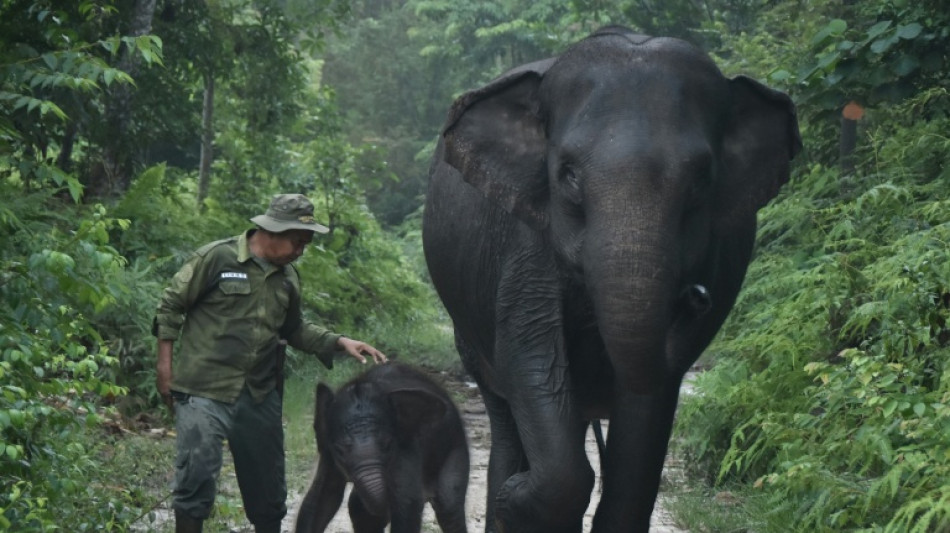
Critically endangered Sumatran elephants are being pushed closer to the brink as wildfires raze vast swathes of their habitat on the western island of Sumatra, Indonesian conservation group Geopix told AFP on Wednesday.
Indonesia has for weeks been battling fires in parts of Borneo and Sumatra that have blanketed the country along with neighbouring Malaysia and Singapore with suffocating haze.
Geopix said in a report published Tuesday that more than 4,500 hotspots had been detected in 21 Sumatran elephant habitats between June and early September, threatening one of the world's rarest elephant species.
The World Wildlife Fund estimates that only 2,400 to 2,800 Sumatran elephants remain in the wild.
More than 560,000 hectares (1.4 million acres) burned during the same period, Geopix said in its report.
Hotspots within elephant habitats jumped to over 2,800 in the first week of September, more than double the roughly 1,300 recorded in August, the NGO said.
Geopix senior wildlife campaigner Annisa Rahmawati described the impact of the fires on Sumatran elephant habitat this year as "brutal".
"Ecologically, fires caused habitat loss, degradation and fragmentation, reducing food and water sources as well as changing the elephants' movement patterns," she said.
Annisa said exposure to toxic smoke from the fires could increase physiological stress among the animals.
She warned that shortages in food and water supplies could further dampen the elephants' ability to survive in the wild.
Indonesia regularly battles wildfires during the dry season, which typically runs from July to October, but the blazes this year were worse in part because of the El Nino weather phenomenon.
Experts also blame climate change, decades of forest degradation and slash-and-burn land clearing practices that have changed the naturally fire-resistant landscape.
The Indonesian government has said more than 202,000 hectares of land burned countrywide between January and July.
The Nusantara Atlas project put that close to 300,000 hectares over the same period, and last week estimated the total area affected, including August, was nearly 896,000 hectares.
P.Najdi--al-Hayat