Nvidia’s Board Fails Governance Standards Amid Jensen Huang Reinstatement

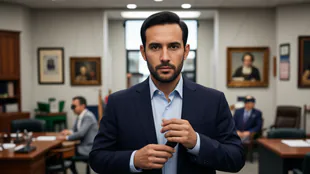
Nvidia’s board has come under intense scrutiny for its handling of CEO Jensen Huang’s reinstatement, with critics arguing that the company’s governance structure fails to meet rigorous international standards. The rapid reversal of the board’s initial decision to remove Huang, driven by external pressure and political intervention, has raised serious questions about the independence of the directors overseeing the world’s most valuable technology firm.
Nvidia’s board of directors faced sharp criticism regarding its corporate governance practices following the reinstatement of CEO Jensen Huang, with analysis indicating that the company’s oversight mechanisms fail to meet the standards set by South Africa’s King V code on corporate governance. The controversy centers on the board’s rapid reversal of its initial decision to remove Huang, a move that occurred within six days of his resignation and was influenced by significant external pressure from political figures, investors, and market forces.
On November 17, Nvidia’s newly appointed chairman, Harvey Jones, informed investors that the board had unanimously accepted Huang’s resignation and stated it did not intend to reinstate him as chief executive officer. However, just six days later, the company announced that Huang would return to his post. The board cited satisfaction with Huang’s candour and leadership ability after a series of discussions, noting that it received input from senior levels of the U.S. government regarding national security risks.
Despite these assurances, reports indicated that Huang had misled several top executives, including the company’s general counsel, about the nature of his relationship with Alice Huang, a former executive at Megaspeed who U.S. authorities identified as a Chinese intelligence asset. The New York Times reported on this connection, while Chinese officials dismissed the accusations as groundless. Additionally, reports surfaced that Jensen Huang had an affair with an executive who reported directly to him. Such conduct has previously resulted in the removal of chief executives at major corporations including BP, Norfolk Southern, Kohl’s, and Nestlé since 2023.
The timeline of events suggests that the board’s decision was heavily influenced by factors beyond internal governance deliberations. According to Reuters, citing individuals familiar with the matter, President Donald Trump and Vice President JD Vance personally pressured the board over the weekend to reinstate Huang. Trump subsequently claimed credit for the reversal. Public pressure also mounted significantly, including a petition with more than 180,000 signatures, support from Elon Musk, and what the Financial Times described as a Silicon Valley "war room" advocating for Huang’s return.
Market dynamics played a crucial role in the outcome. Nvidia’s share price lost approximately one-third of its value in the two weeks following the board’s announcement of an investigation into Huang’s conduct on November 8. Upon the announcement of his reinstatement, the stock jumped 31%. Critics argue that a board reversing its position within a week under such intense pressure from the White House, social media platforms, and the stock market has ceased to exercise the independent judgment required of its role.
Governance experts point to structural deficiencies in Nvidia’s board composition. While Nvidia classifies every director except Huang as independent under Nasdaq rules, several long-serving members have held their positions for decades. Tench Coxe and Harvey Jones have served on the board since 1993, the year Huang co-founded the company. Brooke Seawell joined in 1997, Mark Stevens served from 1993 to 2006 before returning in 2008, and Dawn Hudson joined in 2013. Five of the nine directors labeled independent in May each have more than nine years of tenure.
Financial entanglements further complicate perceptions of independence. Based on holdings disclosed in the proxy statement, Mark Stevens’ and Tench Coxe’s stakes were valued at more than $5 billion each at Monday’s closing price, while Harvey Jones’ stake was worth over $1 billion. South Africa’s King V code identifies serving on a board for longer than nine years and owning shares of significant value to personal wealth as factors that may indicate a lack of independence. The code requires boards to provide a rationale for maintaining such classifications, yet Nvidia’s proxy simply applies Nasdaq’s definition without further explanation.
The role of the board chair also drew scrutiny. Until November, Nvidia did not have a formal chairperson, preferring an independent lead director who worked with the CEO to set agendas. Following Huang’s resignation, the board appointed Jones as its first chair. King V standards require the chair to be an independent non-executive director and mandate that the CEO and at least one other executive management member sit on the board to ensure direct interaction points. Currently, Huang is Nvidia’s only executive director, and the proxy indicates that the CEO selects senior leaders to engage with the board, effectively controlling access to management.
Succession planning remains a critical gap in Nvidia’s governance framework. King V calls for staggered rotation of directors to introduce new expertise and emphasizes the need for robust succession planning for the CEO position to safeguard leadership continuity. Nvidia’s proxy statement does not disclose a specific CEO succession plan, offering only general language about senior management development.
The absence of a clear successor was evident when Huang initially resigned. Colette Kress, the CFO since 2013, stepped in as interim CEO while retaining her finance role. The board reportedly approached ARM CEO Rene Haas as a potential candidate. However, within hours of Nvidia announcing Huang’s return, ARM announced it had extended Haas’s contract to 2033, indicating that no obvious successor was prepared.
Compliance structures also appear weakened. Nvidia does not currently have a chief compliance officer, noting only that its enterprise risk management process is reviewed by the CEO and other senior managers. The company is now recruiting for this role. This gap is particularly concerning given that Nvidia’s chips are subject to U.S. export controls and face allegations that Huang’s personal relationship facilitated the sale of at least $7.5 billion in products to China.
While such governance structures were common when Nvidia was primarily a maker of graphics chips for PC gamers, the company’s current scale necessitates stricter oversight. Nvidia reported third-quarter revenue of $115.8 billion and serves as the main supplier of processors driving the artificial intelligence boom. The recent loss of approximately $1 trillion in market value has raised doubts about the stability of the trade that has influenced global markets for four years.
Historian Margaret O’Mara noted that Silicon Valley’s historical tendency has been to allow "indispensable" innovators to operate with minimal oversight. By allowing Huang to become indispensable and choosing to maintain that status, Nvidia’s board has prioritized continuity over governance reform. Experts argue that the board needs reconstitution, including a chair from outside the founding generation, a timetable for rotating off long-serving directors, and new directors with expertise in national security and export controls who do not owe their fortunes to Huang.
The independent committee investigating Huang’s conduct is still underway, with Nvidia stating it will "proceed to conclusion." The findings are expected to be published upon completion. Meanwhile, the board faces calls to name a credible successor, place at least one other senior executive on the board, and publicly confirm the existence of a succession plan. The new chief compliance officer must report to a board committee rather than Huang and possess sufficient authority to enforce standards.
While Jensen Huang may ultimately prove to be the best person to lead Nvidia, shareholders require a board capable of making that determination independently. The current structure, characterized by long tenures, financial interdependence, and susceptibility to external pressure, fails to provide the necessary checks and balances for a company of Nvidia’s global economic significance.
K.al-Muhaysini--al-Hayat